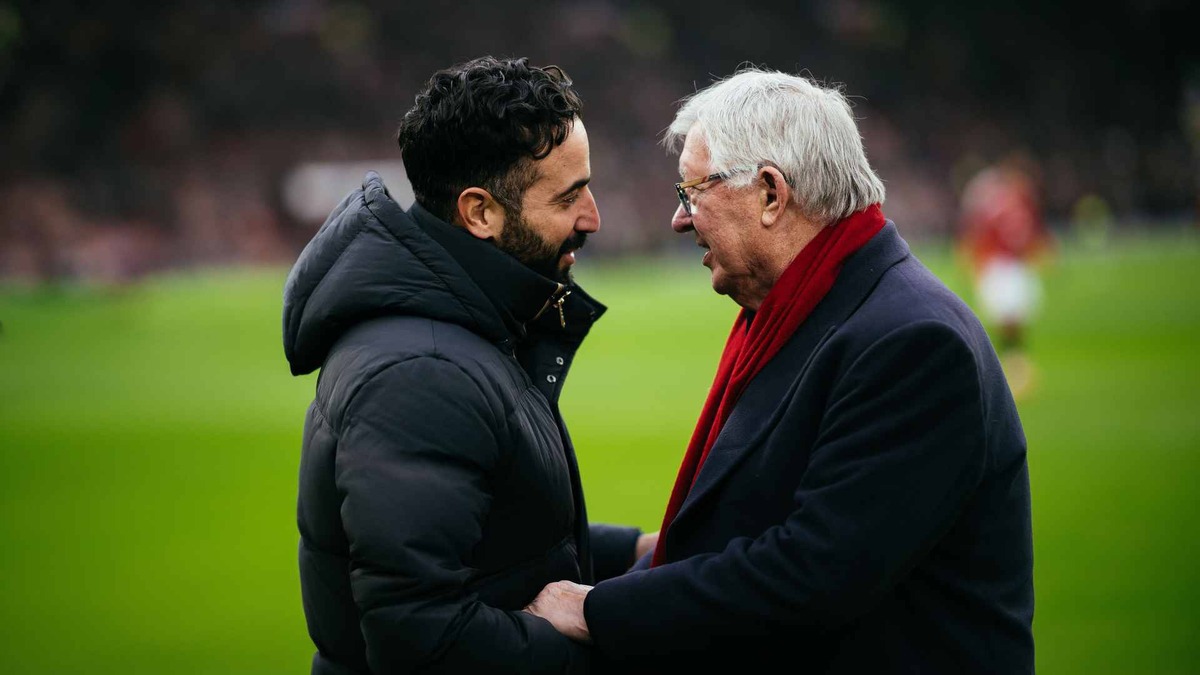
Under Ruben Amorim, Manchester United must improve quickly and their recruitment strategy suggests they know it.
Manchester United have no time to waste.
After a disastrous 15th-place finish in the Premier League last season, the club enters the new campaign under immense pressure to produce immediate results.
Ruben Amorim has brought cautious optimism, but everyone at Old Trafford knows that patience will be in short supply.
If United fail to show early signs of improvement, the cycle of chaos that has plagued them post-Ferguson could spiral even further.
Currently on their pre-season tour of the United States, Amorim is putting in the groundwork.
His sessions have focused heavily on physical conditioning and tactical clarity.
The Portuguese manager has made it a priority to instil his favoured 3-4-2-1 system into a group of players who, for the most part, are still adjusting to its demands.
But even Amorim knows that tactics and physicality alone won’t fix a squad that has underperformed for years.
The bigger focus this summer has rightly been recruitment.
Amorim needs players that not only fit his philosophy but are also capable of handling the demands of the Premier League.
So far, Manchester United’s approach in the market suggests they are finally learning from their own recent mistakes and perhaps even drawing inspiration from the club’s greatest era.
United have already brought in Bryan Mbeumo and Matheus Cunha, two players familiar with English football and perfectly suited to Amorim’s system.
Both are expected to occupy the ‘ten’ roles behind the striker, tasked with linking play, pressing aggressively and contributing goals, something United have sorely lacked.
These signings are encouraging not just because of their tactical fit, but because they point to a shift in transfer strategy.
Rather than chasing expensive stars from abroad who take months to settle, or worse, never do – United seem to be targeting proven Premier League players who can hit the ground running.
After the failed expensive signings on Rasmus Hojlund, Antony, Jadon Sancho and more, this seems a sensible approach.
CLICK HERE TO JOIN THE CENTREDEVILS WHATSAPP GROUP CHAT NOW!
It’s a strategy that echoes the success of Sir Alex Ferguson.
Back in the early ’90s, Ferguson shifted United’s recruitment towards buying domestic talent who could make an instant impact.
Eric Cantona’s arrival from Leeds changed the trajectory of the club.
The same approach brought in Wayne Rooney, Rio Ferdinand, and Edwin van der Sar, all players who adapted instantly and raised the level of the team.
Crucially, these signings didn’t just strengthen United; they weakened direct rivals in the league.
Now, with links to Premier League strikers like Nicolas Jackson and Ollie Watkins, United look to be following a similar path.
It’s no coincidence that the club’s most promising window in years involves players who are already well-acquainted with the intensity, speed, and unpredictability of English football.
Amorim may be new to the league, but United are rightly trying to eliminate as much risk as possible when it comes to player adaptation.
For Manchester United to get back to where they want to be, challenging for titles, recruitment will be key.
If Amorim is to stand any chance of succeeding, he needs players who understand the league and his demands from day one.
The club’s early business suggests they know this, and for once, there appears to be a coherent plan.
Of course, signing Premier League talent isn’t a guaranteed formula.
But it does represent a lower-risk approach – one that gives Amorim a fighting chance to lift United out of the depths of last season.
For a club that has stumbled from one philosophy to the next, it’s a sign of overdue progress.