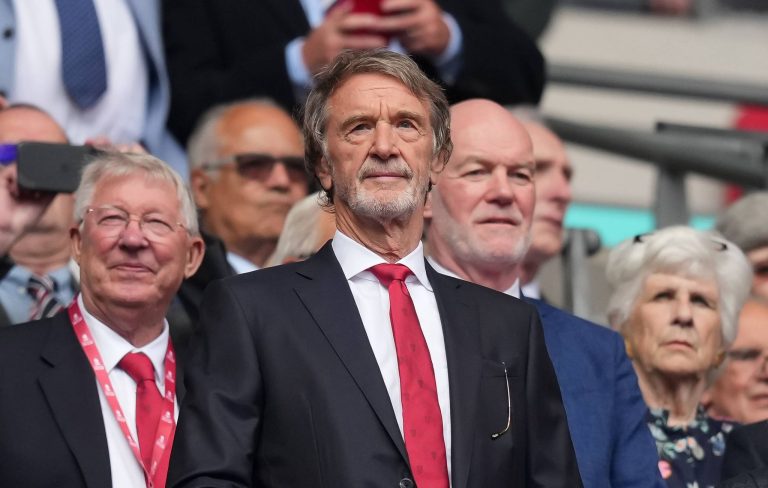
INEOS and Sir Jim Ratcliffe clearly care about Manchester United and trying to restore the club to former glories.
They have poured money into the club, changed the structure upstairs and are trying to be more ruthless in player performance.
Though the decisions haven’t worked and the INEOS era has been haphazard with some of the worst results on the pitch, Ratcliffe and INEOS did inherit a mess from the Glazers.
Maybe it’s because Ratcliffe is so new in running a football club the size of Manchester United or the fact that the directors are also getting used to running a club like Manchester United but the INEOS era has been nothing short of a disaster.
There is more bad news on the horizon for Ratcliffe as his INEOS business faces higher borrowing costs as the group’s credit score was cut for the second time in two years.
According to a report in The Telegraph, the rating agency Fitch on Tuesday downgraded the creditworthiness of Sir Jim’s company after concerns about soaring debt levels with weakness in the global chemicals market as a whole.
This is the second time INEOS has seen a credit rating cut after it was lowered to a BB rating in January 2024.
A lower credit rating means that it is harder for companies to borrow money, meaning the debt costs increase.
Fitch mentioned that Ineos’s debts had ballooned to £4bn because of a new project named Project One ethane cracker development based in Antwerp.
The agency acknowledged the Chemicals conglomerate issues were made worse by a slowdown in the chemicals market due to trade tensions and low global economic growth.
Due to soaring energy costs from Russia’s invasion of Ukraine, it’s eaten into INEOS’s profitability.
In addition to this, higher interest rates have meant a increase in costs of servicing Ineos debt at a time when a demand for Chemicals has decreased due to the world’s economy regressing.
Ineos are looking to cut debts by selling off and closing down parts of the business to compensate as they did with its Ineos Composites polymers manufacturing business for €1.7bn earlier in the year.
It remains to be seen whether this effects United’s budget or whether it’s standard business practice from Sir Jim in a testing economy.